
Common Writable Materials
If you need a label sticker you can write on, three materials consistently do the job: matte PP, woodfree paper, and art paper. They’re not interchangeable, though. Each one takes pen ink differently, and picking the wrong one for your project can mean smudged dates, skipped ink, or labels that fall apart the moment they get wet.
Why Glossy Labels Don’t Work Well With a Pen
A glossy label has a plastic-like coating on top, designed to look shiny and resist water. That coating gives ink nowhere to go. A ballpoint pen skates across it, a gel pen beads up on the surface, and a permanent marker is about the only tool that reliably sticks and even that can smudge if touched too soon.
If you plan to handwrite on a label right after printing or applying it, you need a surface with some texture or absorbency. That’s exactly what matte PP, woodfree paper, and art paper are built for.
Matte PP Labels: Best for Writable Labels That Need to Survive Moisture
Matte polypropylene or commonly known as Matte PP is a synthetic, plastic-based label material. Unlike glossy PP, its surface is treated to remove the shine and add a bit of texture. That texture is what allowed pen ink to grip the surface instead of sliding off.
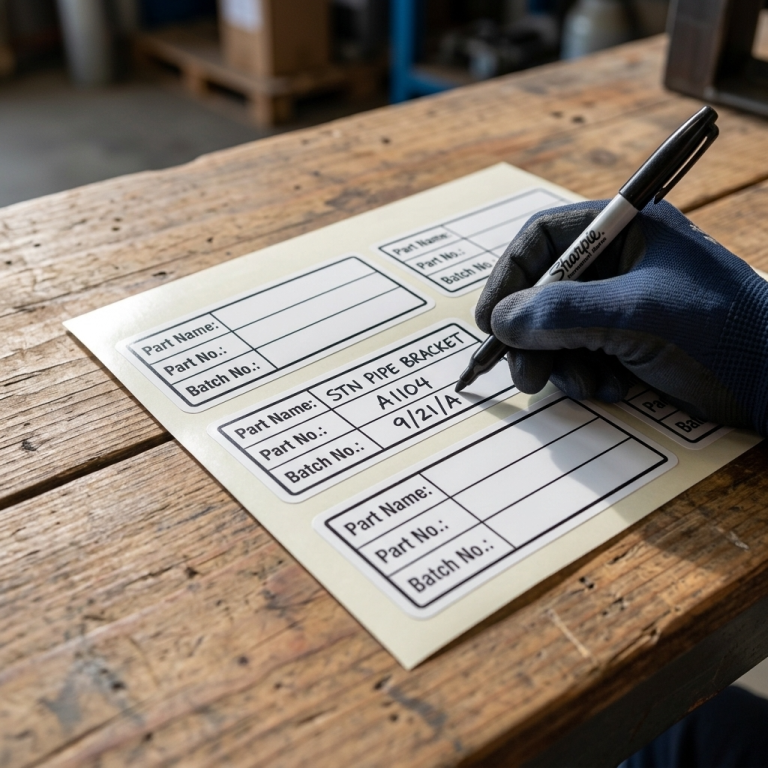
Best for: drum and container labeling, warehouse and cold storage tagging, chemical and equipment identification, or any industrial environment where labels get exposed to moisture, grease, or heavy handling but still need a handwritten batch code or inspection date.
-
- Waterproof and tear-resistant, like standard plastic labels
-
- Takes ballpoint and gel pen ink well
-
- Permanent marker works even better and dries fast
Woodfree Paper Labels: The Most Pen-Friendly Option
Despite the name, woodfree paper does come from wood — it goes through a chemical pulping process that removes most of the lignin, the compound that makes wood-based paper yellow and go brittle over time (think cheap newsprint). What’s left is a smooth, bright white, uncoated paper that writes almost like notebook paper.
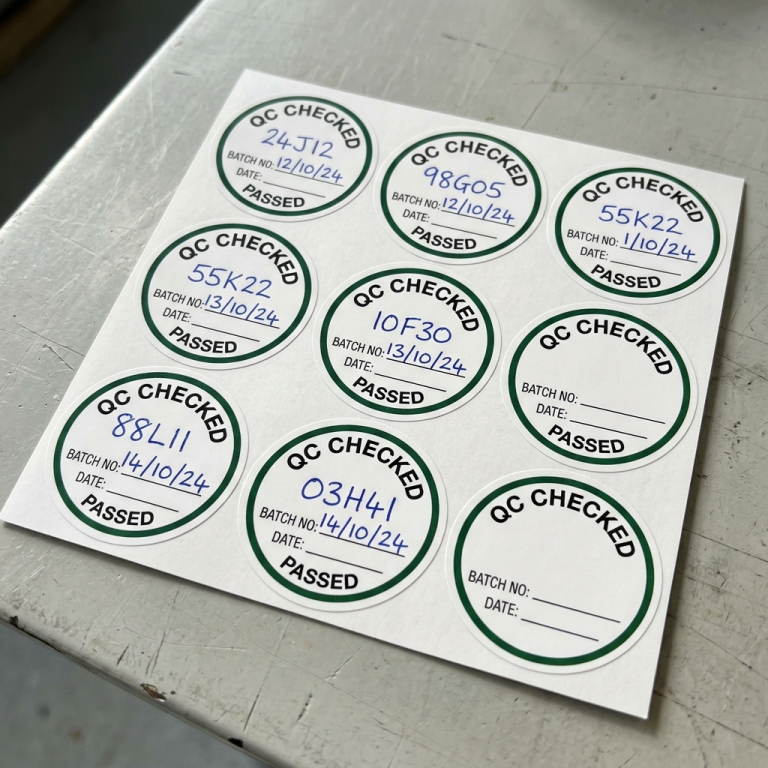
Best for: internal inventory tags, work-order and job traveler labels, indoor warehouse shelf labeling, quality control tags or anything that stays inside a dry facility.
-
- Completely uncoated, so there’s nothing blocking the ink from the fiber
-
- Works with ballpoint, gel, fountain pen, and pencil
-
- Not waterproof and not durable outdoors
-
- The cheapest of the three writable label materials
This is also the material we most often use for label printing jobs where the design still needs to leave room for a handwritten information.
Art Paper Labels: A Middle Ground Between Print Quality and Writability
Art paper is a coated stock, but the coating is thin and matte rather than glossy, so it keeps enough texture for pen ink to grip while still printing sharper colors and logos than woodfree paper.
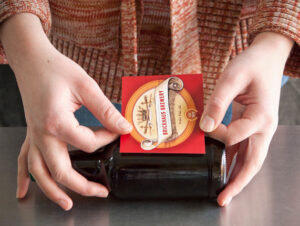
Best for: retail-ready packaging labels for manufactured goods, where the printed branding needs to look sharp on the shelf but a line worker still has to add a lot number or production date before the product goes out the door
-
- Prints more crisply than woodfree paper
-
- Still pen-friendly, unlike glossy or laminated stock
-
- A good balance point for labels that need both branding and handwriting
Matte PP vs. Woodfree vs. Art Paper: Quick Comparison
| Material | Writable? | Waterproof? | Best Use Case |
|---|---|---|---|
| Matte PP | Yes (ballpoint, gel, marker) | Yes | Drum labels, cold storage, chemical and equipment tagging |
| Woodfree paper | Yes — best of the three | No | Indoor warehouse tags, work orders, inventory labels |
| Art paper | Yes | No | Manufacturer packaging labels needing handwritten lot/batch codes |
We Can Preprint Your Labels
If you already know what your labels need to say or look like, logos, product names, barcodes, we can preprint your design directly onto matte PP, woodfree, or art paper, then leave the right amount of blank space for anything you still want to fill in by hand.
This is especially useful for businesses ordering labels in volume such as manufacturers tracking lot numbers, warehouses tagging inventory, or facilities labeling drums and equipment where each label needs one handwritten detail added on the line. You get consistent print on the parts that don’t change, and a writable surface for the parts that do.